Tuesday, November 14, 2006

Hear your writing!


Microsoft Word enables you to have text in Word documents read aloud. When using the computers in the library and computer room, simply make sure the Speech toolbar is displayed.

1. On the View menu, click on Toolbars and then click Speech.
2. Select (highlight) the text that you want Word to speak.
3. On the Speech toolbar, click Speak Selection.
4. To stop Word from speaking the text, click Stop Speaking.
(under system preferences, you can change rate of speech and choose different voices)

Why use this? There are a variety of educational applications:

- Students can listen to their writing as part of the editing process. It is common to misread what we have recently wrote, filling in what we intended to say rather than reading what is actually on the computer screen. Having the computer read it allows us to hear the text exactly as it was written and make corrections.
- Students can practice spelling words through another sensory channel. They type their spelling word then type the word a second time with a space between each letter. The computer will read the word first, then read it letter by letter. You may want to slow down the rate of speech for this task.
- Struggling readers can access information on the internet, even if the text is above their reading level. Copy and paste articles of interest into a Word document. Now they can listen to the information. Buy the way, TIME FOR KIDS is online in digital format..allow kids to "listen" if they are not on reading level.

Wednesday, November 01, 2006

The Day After....


I am sure our students are all a little tired from last nights events. Some may be dragging, and others may still be reeling from the excitement. It's a great day to bring out the body tools from your tool kit, namely heavy work activities. These include:

# WHOLE BODY actions involving pushing, pulling, lifting, playing, and moving

# USE OF HANDS for squeezing, pinching, or "fidgeting"

# ORAL actions such as chewing, sucking, and blowing

Here are some specific activities that might fit into your classrooms or the school environment:

- stacking or moving chairs/books

- ANYTHING with weight to it! (weighted objects such as lap pillow, wrist weights, water bottles filled with sand to carry during transitions)

- tug of war

- jumping (jump rope, hopscotch)

- climbing on jungle gyms

- hanging on monkey bars

- "push of war" between partners

- Twister (great for indoor recess)

- Crab walk to areas in classroom (hands and feet on floor, belly up)...

- erasing, coloring on chalkboard

- yoga poses at the rug

- resisitve toys or tools (clothespins, scissors to cut putty or cardboard

- putty press (flatten putty on wall or desk/table)

- Play-doh Factory presses and molds, rolling pin

- theraputty play-doh(hide and seek with coins, tug of war, cut and flatten to make cookies, roll out to make letters)

- silly putty

- color/draw with crayon on textured surface

- bingo markers

- hole punches

- spray bottles filled with water (classroom jobs such as watering plants, cleaning chalkboard)

- rubber band finger stretches (prior to writing)

- blowing wind instruments, bubbles, cotton balls

- splatter paintings (use thin paint on paper... blow air through a straw and watch the paint move!

Monday, October 30, 2006

Calming for Halloween

Halloween is a very exciting day for most students. They may be tightly wound with the anticipation of the evening's events. This is not a day to miss recess! Here are some other activities that usually have a calming effect:

- Play a listening game, try to identify the sounds you hear
- Dim the lights
- Take a break and have the students push against the walls
- Play quiet music (drumming, environmental sounds)
- At snack,drink from very tiny straws or coffee stirrers
- Drink applesauce or pudding from straws
- Take slow deep breaths
- Sit in bean bag chair
- Jump in place with hands on top of head, pushing down
- Give directions by singing
- End with the expected routine
- Speak in a whisper
- Curl up and rock like an egg on the rug

Why Heavy Work?


Having a classroom of students at different levels of alertness can be a particular challenge to teachers. Some students are underaroused: looking sleepy, appearing uninterested and yawning. Others are overaroused, ready to run a marathon, but not ready to sit, listen or write. There is one surefire activity to address the needs of all these students. It is known as HEAVY WORK. When children engage in focused, heavy work activities, they arrive at a "just right" state.

Mary Sue Williams and Sherry Shellenberger developed "How Does Your Engine Run? The Alert Program for Self Regulation." They use engine terminology to help kids understand if their bodies (engines) are running low, high or just right. Why is heavy work effective to both calm and alert students? In their book, Take Five! Staying Alert at Home and School, they offer this explanation:

"...the bottom part of the brain (brainstem), the back part of the brain (cerebellum), along with many other areas of the brain are stimulated through heavy work to muscles and joints (activities that involve pushing,pulling, lifting, hanging, climbing, tugging and towing). When engines are in high gear and participate in heavy work, a message is sent to the rest of the brain and body that says, "Chill out...Calm down...We are not in danger here. We can relax and focus." When engines are in low gear and participate in heavy work, a message is sent to the rest of the brain and body that says, "Be alert! Wake up! We need to get going and Focus!"


So when in doubt, provide heavy work activities for your class. Look for a future post on specific activities you can do in your classrooms and in other school environments.

Thursday, October 26, 2006

Come to Your Senses!


National Sensory Awareness Week is October 25 - 31, 2006

We are all sensory beings. We rely on a variety of sensory input to help us attend and function within work and play situations. How about that cup of tea that gets us to write a report, the clicking of a pen that allows us to gather our thoughts, the doodling on paper that lets us listen on the phone? Children need these same supports during their school day to keep them in the "just right" place for learning. Allow your students to hold a small ball of putty in their hands during rug time and notice what better listeners they are!

Wednesday, October 11, 2006

Vertical Surfaces


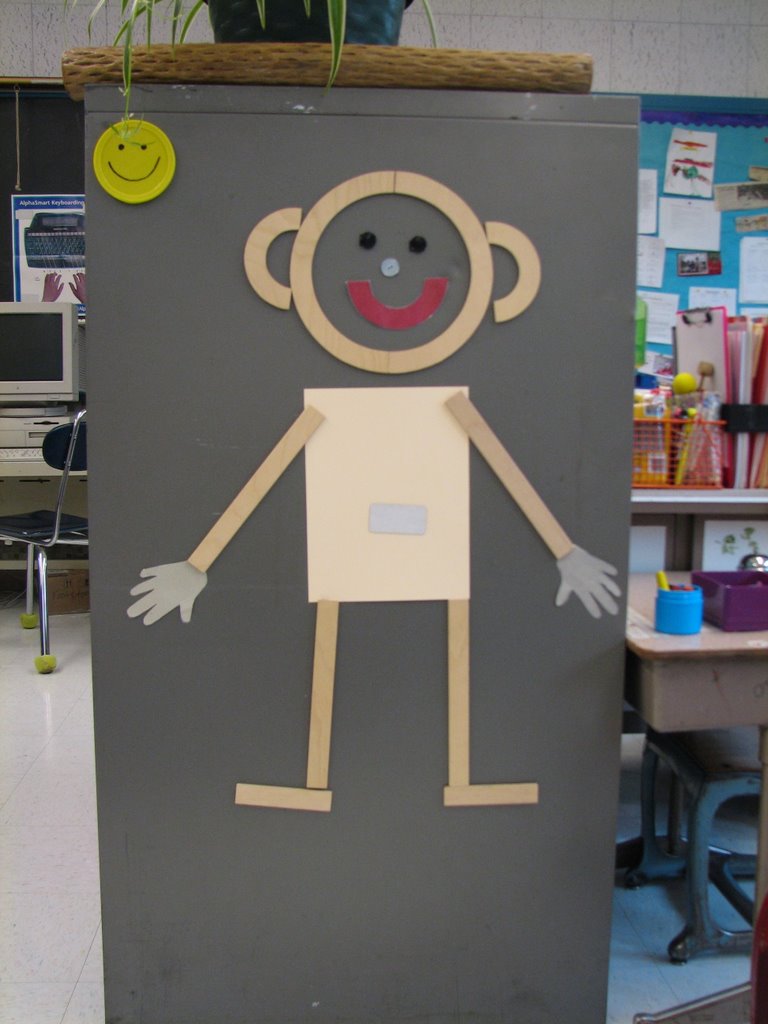
Look around for vertical surfaces at home and in your classrooms. A common one in the classroom is a large filing cabinet...ideal for students to stand and work on magnetic activities. At home, use the refrigerator or back of a door.


Thursday, September 14, 2006

Easels...not just for reading


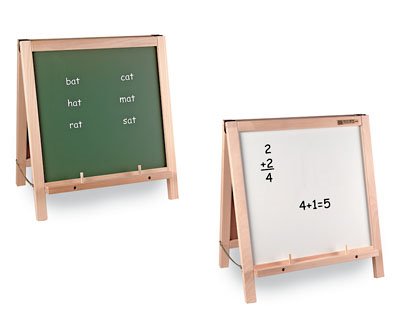
Tabletop easels are one of the greatest tools to increase upper arm strength and stability, hand and wrist positioning, and fine motor control.

When you use an easel to write or paint on, your body calls upon a whole different set of muscles than if you did the activity flat on a desk.

TRY IT OUT... Hold a book or clipboard up on an angle (45 degrees or so) with the base of the book/clipboard resting on the table. Now write something.

Next, put the paper flat on the table and write the same thing. See how different that feels?

Do it again and pay attention to which muscles you are using and how your hands, wrists and upper body are positioned differently. These differences are precisely the aspects we want to target when developing upper arm stability and control!

Tabletop easels not just for propping up materials to read. Use them for a variety of activities. Try wikki stiks, magnetic letters, pegboards, magnadoodles, and small chalkboards. The ideas are endless!

Wednesday, September 06, 2006

The Family Corner - preparing for school

WELCOME BACK!
The start of school is an exciting time, but it can also cause anxiety for some youngsters. Follow these simple tips to make the transition from summer to school a little easier.
Get enough sleep: Remember, elementary age children typically need 9 - 11 hours of sleep each night.

Eat a good breakfast: Provide fuel for an active mind.

Get moving: A little exercise prior to school goes a long way. Walking to school or arriving 10 minutes early for playground time will prepare your child for the day.

Friday, June 02, 2006

The Family Corner - summer


Transition from School Year to Summer

Occupational therapists promote a work/play balance. Our lives become stressful or disrupted if this balance tips in one direction or the other. Dr. Mel Levine talks about this in his article titled "A Balanced Summer" found at:

http://www.allkindsofminds.org/ArticleDisplay.aspx?articleID=72

Summer is an opportunity to build many skills even though your children are not in school. Please remember to allow for down time, freedom from adult supervised activities. This is when creativity is fostered through imaginary play, engaging in self motivated projects, or lying and looking up at the clouds.

Sunday, May 14, 2006

The Family Corner - snacks

Snacks for Organization and Alertness!
MCAS testing is this week. Why not send in snacks that would help your children function at their best. Crunchy snacks are alerting. Chewy snacks are organizing. Of course, there are always Cheetoes and Starbursts, but here are healthy ideas to try.
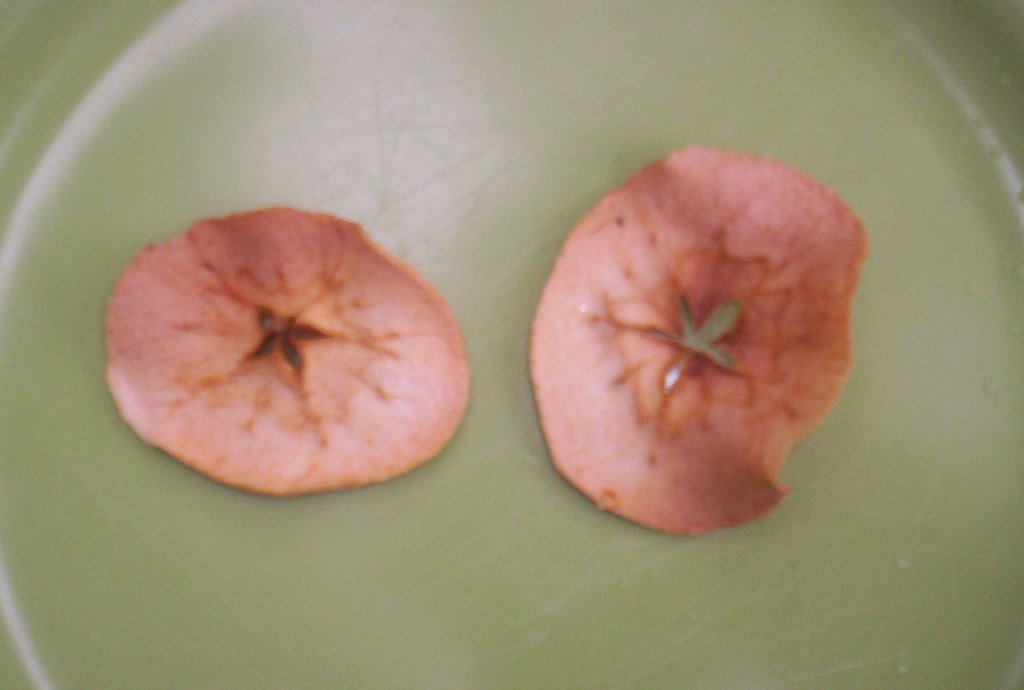
Apple rings:
1. Preheat oven to 225°. Line two baking sheets with nonstick baking mats or parchment paper.

2. Peel an apple and slice in thin rings across the core (seeds will fall away and you get a nice star pattern in the middle). Transfer slices to baking sheets. Bake until tops look dried, about 30 minutes. Flip slices; bake until completely dried, 25 to 30 minutes more. Dry on wire racks. Refrigerate in an airtight container up to 3 days.
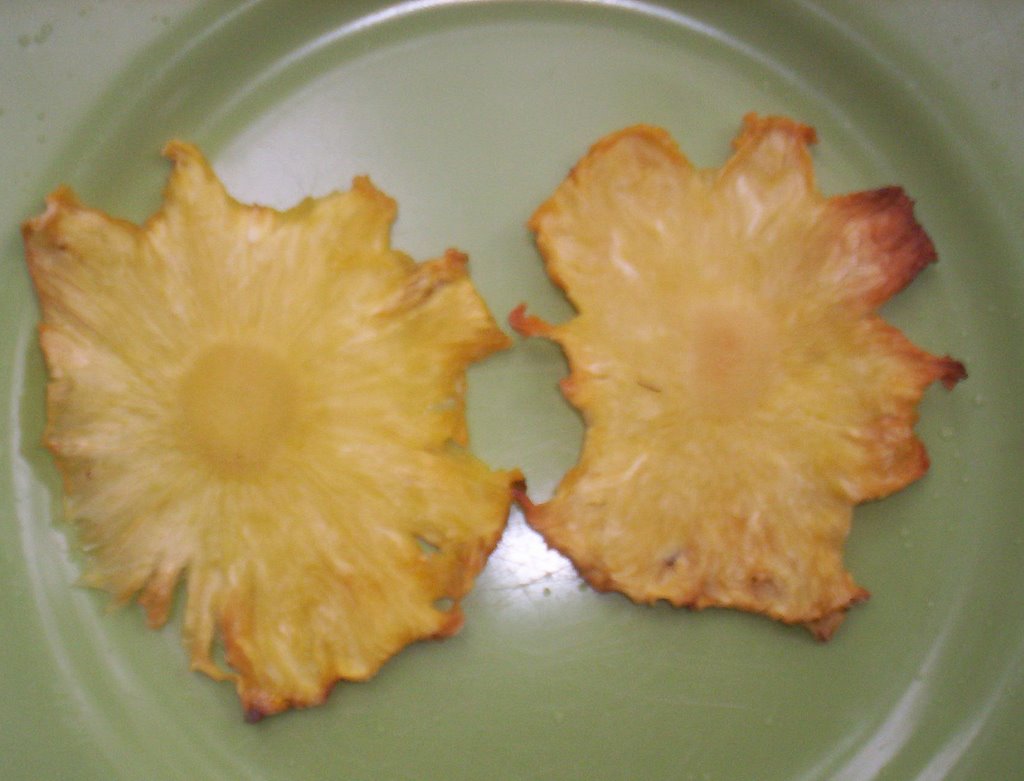
Dried pineapple flowers:
1. Preheat oven to 225°. Line two baking sheets with nonstick baking mats or parchment paper.

2. Peel pineapple. Using a small melon baller, remove and discard pineapple "eyes." Using a sharp knife, cut pineapple crosswise into very thin slices. Transfer slices to baking sheets. Bake until tops look dried, about 30 minutes. Flip slices; bake until completely dried, 25 to 30 minutes more. Dry on wire racks. Refrigerate in an airtight container up to 3 days.

Monday, March 27, 2006

Daily Brain Tip - Snooze You Lose

Is your child getting enough sleep? Although there's no magical number of hours required by all kids in a certain age group, generally kids ages 5 to 12 need about 9-11 hours of sleep a night.

Sleep deprived individuals have a shorter attention span, impaired memory, and a longer reaction time. Adequate sleep is important to the memory storage process. (Information is encoded into longterm memory sites during sleep).

Please remind your students to get adequate sleep for their mental and physical health!

Thursday, March 16, 2006

Daily Brain Tip - Laugh!

Laughing provides the brain with more oxygen, fuel for learning. It also releases endorphins in the blood. These are the body's natural painkillers, helping students enjoy the moment. Emotions enhance memory, so positive feelings that result from laughter increase the chances that students will retain what they learned. Not only is laughter the best medicine, but it can also be a valuable part of your lesson. Check out http://www.teach-nology.com/newsletters/ for suitable jokes to tell in class. tip

Monday, March 13, 2006

Daily Brain Tip - Wear a helmet

Protect your brain. Wear a helmet when you are biking, skateboarding and skiing. Cyclists who wear helmets are 85 per cent less at risk of serious head injury. Using a helmet was associated with a 60 percent reduction in the risk for head injury in skiers. Take part in prevention!

Daily Brain Tip -Eat Well


Brains work best when you eat a well balanced meal. Without proper nutrients, you may experience lightheadedness, forgetfulness and become overly emotional. Start the day right with a good breakfast.

Tuesday, March 07, 2006

Cool School Tool - slant board

The muscles of the hand are divided into power muscles and precision muscles. The precision muscles (needed for writing) work better when the wrist is extended. Notice students who write with their wrist bent. They are probably experiencing muscle fatigue. Writing on a slanted surface is a good solution. Architects and artists often use an inclined surface. There are slanted clipboards that provide this function, but let's think along the lines of reinvention and reuse. Any 3-4 inch three ring binder makes a great slanted surface for a student's desk. Try it out!

Thursday, March 02, 2006

National Brain Awareness Week


National Brain Awareness Week is March 13 - 19. Celebrate by passing on daily tips to students to enhance and excercise their brains.

Wednesday, February 01, 2006

Cut It Out


Did you ever stop and think of all the different skills that are used to cut out a circle? First you have to figure out how to hold the scissors - (motor planning). Then you have to be able to open and close them (separation of the strength side of the hand [ring & pinky fingers] from the skill side of the hand [thumb, index & middle fingers]). You also have to be able to hold and move the paper with one hand while you open, close, and guide the scissors with the other hand (bilateral control, visual motor integration). That's a lot to think about before you even attempt to cut on a line or around a shape.

Scissor skills develop in a particular order:
1. making random cuts
2. making consecutive cuts with a forward movement (i.e. snipping along the edge of a piece of paper)
3. cutting along a straight line
4. cutting along a straight line with one change of direction
5. cutting along straight lines with more than one change of direction (squares, diamonds)
6. cutting along a curved line
7. cutting out a circle
8. cutting out shapes with both straight and curved lines

While a child is still learning to cut, the wider the line and the simpler the shape the more success he/she will have. Start with a line at least a 1/2 inch thick. When he/she has mastered that, go to a 1/4 inch, then 1/8 inch. As a child develops more skill and control over the scissors, the width of the line should narrow and the complexity of the shape should increase.

Here's a little rhyme to remind children how to hold the scissors in the proper thumb on top position: "Fingers on the bottom, thumb on top. Open up the scissors and chop, chop, chop."

Friday, January 13, 2006

National Handwriting Day

Today is National Handwriting Day, in celebration of John Hancock's birthday. Take part by writing a note to someone in your own personal script. Have your students put extra effort into their handwriting today. Create an oversized birthday card to John Hancock and have each member of your class write an anonymous message in their best handwriting. Let the class try to guess the author of the message based on the handwriting alone.

If you think handwriting is a lost skill in the age of computers, think again! High school students taking the SATs are now required to hand write a two page essay in 25 minutes. This requires thinking and writing quickly! Handwriting is not counted, but it does have to be legible in order to be scored.

In school, writing by hand is one of the most common ways we expect students to demonstrate their acquired knowledge. Making it an automatic and effortless skill is essential in order for students to concentrate on the content of what they are expressing. Unfortunately, many students struggle with this basic task. Here is a nice exercise to experience "graphomotor" difficulty. Imagine how it may interfere with school performance. Go to : http://www.pbs.org/wgbh/misunderstoodminds/experiences/writingexp1a.html

Wednesday, January 04, 2006

The Smile Break

A good way to start the new year is with a smile. Smiling is highly contagious and can quickly circulate within the school. It is one way to make our brains produce endorphins, important for pain control, peace and well-being.

Here's an experiment you can do to feel the actual benefits of smiling. Clench a pen horizontally between your teeth and grin. How do you feel? Next, hold the pen horizontally between your lips in front of your teeth and try to grin as wide. How does this feel? Most people don't feel as happy with the pen between their lips because it doesn't activate all the facial muscles involved in smiling. You get a more positive feeling when your whole face smiles!

Often we have students take a movement break to stretch muscles. Did you know we use 17 muscles when we smile? Why not have the class take a smile break? Visit this website for more information:

http://www.computerfit.com/ch2part2i.html

Wednesday, December 14, 2005

The Family Corner - meals

The usefulness of utensils!

Getting together for a family meal is important in many ways. Not only has it been shown to be a factor in lowering teenage substance abuse, it is also a great time to practice hand skills. How, you say? Encourage your children to hold the spoon and fork appropriately. The grasp of a spoon or fork mimics the pencil grasp. Introduce cutting with a knife to practice two handed coordination. The more kids utilize good hand skills at the dinner table, the better they will be at holding a pencil and using other classroom tools. Dig in!

Saturday, December 10, 2005

Cool School Tool - water bottle weights

Weights!

Weights are a great way to build hand and arm strength, but did you realize they also have a calming, organizing effect? Drink your water and then fill up the bottle with sand or kitty litter. Glue on the cap and you have 1 lb. weight. Use these weights to help a student transition to different areas in the school (especially helpful in keeping those waundering hands off walls and other people).

Thursday, December 01, 2005

Cool School Tool - the tennis ball

Last month the Boston Globe printed an article on two "do-it-yourself" magazines, Make and Ready Made. These magazines are for people who look at everyday items and think, "How else can I use these objects?" They encourage reinvention and reuse - finding the strange but perfect beauty in everyday things. OTs as a group have embraced this concept in order to adapt items to meet their clients' needs. The next several posts will focus on common place objects that can be used a school tools.

The first featured item is the tennis ball. By now you have seen several classrooms with them on the bottoms of chair legs (not our original idea, but certainly admired by us). They allow the chairs to be pushed in with minimal effort and without a sound...a quiet classroom!

Another use is the hand puppet. Cut a slit for a mouth, draw a face and squeeze to open. Have the student store pennies or other manipulatives in them. At home, stick your child's lunch money in and give them a chance to build their hand strength daily.


Find someone who belongs to a tennis club and give them an empty bag to fill up. Tennis balls lose their bounce and they get thrown away.

The Family Corner - pencil skills


Would you like to improve your child's pencil skills in just minutes a day? Before starting homework, try a few Pencil Olympics (see School Function Quick Tip below). If you would like a handout, send a note to your teacher and we will send one home.

The School Function Quick Tip - pencil olympics

Pencil Olympics!

No need for fancy items to practice hand skills needed for writing. Use the common everyday pencil! Pencil Olympics are few quick exercises to do before a writing task with the whole class. They include skiing (walking up and down your pencil with your fingers), the flying camel (rotating the pencil in the air), and weight lifting (straightening and bending fingers as you hold the pencil). Are you curious to see the "triple flip" and the "balance beam"? Come by room 213 and get a handout from Lynda or Beth. We guarantee your students will write longer and more efficiently if you schedule this in your day.

Wednesday, November 16, 2005

Cool School Tool - golf pencil

Little Pencils for Little Hands
Have you ever tried to write with one of those BIG souvenir pencils? It's pretty unwieldy, isn't it? Well, that's basically how it feels when you put a big primary pencil or a long #2 pencil in the hand of a small child. Have them use a short golf pencil instead. Give them a small hand-held pencil sharpener to sharpen it. It's a great activity to improve hand skills.

Tuesday, November 08, 2005

Computing for Kids

Children are spending more and more time on the computer. This can cause repetitive stress injuries. It is recommended that you do a quick 2 minute stretch every 20 - 30 minutes. Now you can make your school computer ergonomic friendly. Stretch Break for Kids By Para Technologies is free software that will run in the background and prompt youths to stretch at timed intervals as well as provide ergonomics hints. Check out our links to download your free copy now!

Tuesday, October 18, 2005

Cool School Tools - seat sack


Are you aways waiting for students to find their assignment notebooks at the end of the day, buried in a sea of loose papers in their desk? Well, look to the seat sack for instant organization! The seat sack can hold items that are used frequently during the school day. Available at Therapro (www.theraproducts.com/) and Childcraft (www.childcrafteducation.com/).

Thursday, October 13, 2005

Now that it fits, get out of that desk!


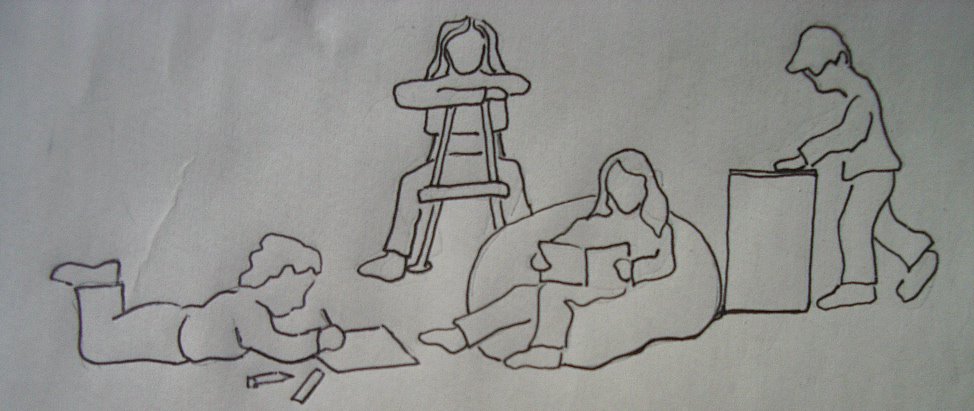
After all that talk about good seating and positioning for school function, let's get the students out of their desks! Our bodies were not made to sit for extended times. Did you know that Winston Churchill did much of his work while standing at his desk? Let's explore some alternate positions for school work.

Standing - Choose a tall counter for a work area. Some students have more attention while standing.

Sitting backwards on chair - This puts the body in a forward leaning position, ideal for writing. It also is a good position for squirmers because it "grounds" them.

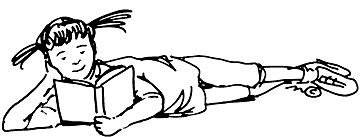
Lying prone on the floor (often seen in Hosmer hallways or on rugs in classrooms) - This is a geat position for several reasons. First, it stabilizes the forearms so that the hand muscles (not arm) are used for writing. Secondly, it encourages visual attention.

Sitting in a beanbag chair - This provides a comfortable, supported seating option. Great for writing with a clipboard or typing on an AlphaSmart.


If students need to be in a desk for longer than 20 minutes, do a few quick stretches. Yoga poses, chair push ups, and brain gym "tune ups" are some examples. Check in with OT/PT staff for ideas and resources.

"Clip art licensed from the Clip Art Gallery on DiscoverySchool.com"

But what about tables?


Now that you have adjusted individual desks, what do you do about tables? This can be tricky since they accommodate any number of children. If you have more than one table, you can make them different sizes (one for larger students, one for smaller students). Again, start with chairs that would fit this particular group. Then adjust the table top to be at the height 2 inches above the student's bent elbow when sitting.

If you have multisized students and only one table, fit the table to the larger students (not the adults in the room, however). Then provide foot stools to accommodate the smaller students.

It is so important for feet to be firmly planted on the ground. Come by the OT/PT room and ask for a phone book. When wrapped in ducktape with nonslip material on the bottom, they work quite well as footstools.

The School Function Quick Tip

Place the Paper - Paper should be placed at a slight angle to follow the natural arc of the writing hand. For right-handed children, put the right corner higher; for left-handed, the left corner is higher. The writing hand is below the line of writing. This encourages the correct wrist position (not awkwardly bent in a "hook" position).