Showing posts with label sensory processing. Show all posts

Tuesday, January 17, 2012

Sensory Patterns in Review

I hope your enjoyed this series on matching apps to sensory preferences.  In review, here are the patterns of relating to our sensory world around us:

Sensory Processing Patterns

Registration -
Bystander
high thresholds, passive self regulation
may not notice sensations ("let the world go by")

Seeking -
Seeker
high thresholds, active self regulation
pleasure with sensations ("wants and gets it all")

Sensitivity -
Sensor
low thresholds, passive self regulation
notices more than most ("no filters, gets everything")

Avoiding - 
Avoider
low thresholds, active self regulation
minimizes sensory experiences ("covers up, gets away")

Keep these patterns in mind when choosing apps for your students.   It might help you understand why a seemingly good educational app doesn't work for a particular student.  Have fun exploring and discovering.

I want to thank Winnie Dunn (a self proclaimed Seeker) for her thoughtful work on Sensory Patterns and relating them to everyday life.  I have learned so much from her over the years.  If you are interested in reading more, please check out her book, Living Sensationally - Understanding your Senses.


Wednesday, March 25, 2009

UDL in the Skies OR Soaring Senses

My colleague Lindsay and I just completed teaching a course on "barrier-free learning", incorporating Universal Design for Learning principles (UDL). A key feature of UDL is offering multiple means of representation, expression and engagement. Watch this video to see how a flight attendant engaged his audience in a way that sparked the interest of his passengers and encouraged participation. Imagine bringing this into the classroom!


The Rapping Flight Attendant - Watch more Funny Videos

Using Winnie Dunn's classification of sensory patterns, I would identify this particular flight attendant as a "sensory seeker". He added increased sensory input to his typical routine to keep himself and the passengers more alert. Check out Winnie Dunn's book, Living Sensationally - Understanding your Senses to learn more about sensory patterns in everyday life.

Thanks to @rmbyrne for his blog post highlighting this video. Check out his blog Free Technology for Teachers for a wealth of resources at your fingertips.

Saturday, December 15, 2007

The Value of Chores

Last Thursday we got such lovely snow, about 10 inches of it. Before school on Friday, there was a fair amount of shoveling that had to be done before uncovering our cars. Everyone in my street was out with their shovels, chatting to each other and getting some nice "heavy work" before starting their day. Typically that time would have been spent in front of a newspaper or the computer. I couldn't help but think of several of my students who would have benefited from this "heavy work" prior to their school day.

That brings me to topic of chores. Not only do they teach a great work ethic and persistence at a task, but in many instances they can be designed to provide the needed sensory input in a child's life. Raking leaves, shoveling snow, carrying out the trash and recycling bins all can help to regulate a child. Have we dropped chores from our children's lives because they are so over scheduled? See a previous post on the value of heavy work.

I am hoping for more snow.

Connection to occupational therapy: skills for the job of living - work

photo citation: North Idaho Dad

Friday, November 02, 2007

Living Sensationally


How do you respond to sensations around you? Are you someone who seeks input, someone who does not notice, someone who avoids it or someone who is too sensitive? Although you have a predominant way of reacting to sensory information, you may have characteristics of all these. Understanding how we are alike and different in our sensory world promotes acceptance and tolerance of each other's behaviors and reactions.
It is part of being human.
Take a moment to think about how you feel riding the subway downtown.
Do you love the experience of sight, sound and movement...or do you cringe at the thought of someone standing next to you?
Does shutting out the experience altogether by plugging into your ipod seem like a great solution to you?
Do you love the jerky bumpy ride with frequent stops...or do you leave the train frazzled and racing to get above ground again?
Perhaps you are oblivious to the activity going on around you and even miss your stop.

I'm still waiting for my copy of Winnie Dunn's book, Living Sensationally, to come in the mail. If you want to get a taste of the book, read this review from the Times.

photo citation

Friday, June 01, 2007

Visual Tools

I watched the finals of the National Spelling Bee last night. After the seventh round, only one girl was left, Isabel A. Jacobson, a 14-year old from Madison, Wisconsin. She was wearing every bracelet she owned on one arm...25 and counting. They were described as her good luck charms, but I think they were more than that. As Isabel explained, "I don't know why it works. Maybe it's because looking at sparkling things keeps me calm."

Visual tools often help students focus and attend. We see this in the classroom as kids use a variety of items to keep alert by gazing at them. What appears to be a potential distraction may in fact be a very useful thing!

Friday, March 16, 2007

The Woman Who Thinks Like A Cow

Why would a leaf on a path cause a cow to stop dead in its tracks? Watch this video on Dr. Temple Grandin titled "The Woman Who Thinks Like A Cow." It is a 48 minute documentary produced by the BBC. This remarkable woman with autism describes what it is like to think visually in our world.

Thinking in pictures gives her a better understanding of animals. Realizing she experiences the world much as animals do, she can relate to them in ways other people can't. Although autism is very different for each person who has it, Dr. Grandin feels the common thread is the ability to notice detail. She developed this talent into skills that turned into a satisfying career. Having a PhD in animal science, she has dedicated her life to the betterment of animals.

Education should have a strong emphasis on building strengths, not just on addressing deficits. Who knows where talents can lead our students!

Other key points in the video:
  • deep pressure is calming and relaxing (notice the "squeeze machine")
  • people with autism have sensory based thinking (think in pictures, in sounds, in touches)
  • sensory defensiveness can create havoc with an individual with autism
  • fear is the main emotion in autism (needing to escape from stressful situations)

Friday, March 09, 2007

Understanding Sensory Differences...Ask James

Honoring differences is what we strive for as occupational therapists. This starts with understanding. The blog School OT thoughts talks about a young man with high functioning autism who has an advice column called "Ask James". He answers a question about his sensory challenges and strategies that helped him. Read his response and you will better understand why many of the children we work with react as they do.

To read the post, go to "Ask James Williams" about sensory processing.

James Williams is an eighteen year old who has written books/essays and presented on the topic of autism. Go to his website to learn more.

Friday, March 02, 2007

WYSIWYG...or is it?

What you see is what you get...not really! Be sensitive to how we present visual information to our students. Sometimes we don't "see" what another person might be noticing. For instance, I was with a youngster in the computer lab. This little girl was making faces at the computer but not attending to what was on the screen. I realized there was a strong reflection from the lights above. Even though I was looking "beyond" the reflection to notice the important information on the screen, the student was using the computer screen as a mirror!

Think about how we laminate materials. Is the glare from the surface going to affect what the child sees? If so, use contact paper if you need to protect the materials.

Have you guessed what the image is above? Is it a glossy gym floor at my niece's volleyball tournament. You can imagine how a particular child might focus on the lights instead of the action, making it difficult to discriminate the relevant information from the background.

Students on the autism spectrum often have trouble making sense of our visual world. They might be focusing in on visual details and patterns rather than the "whole picture". An unfamiliar environment might cause an individual to go into sensory overload. Difficult behaviors could result from trying to shut out the onslaught of meaningless sensations. A wonderful description of this is from the book, The Curious Incident of the Dog in the Night-time, by Mark Haddon. Check it out.

Friday, February 16, 2007

Who Can Refuse?

Please Pop!

We tape a sheet of bubble wrap on the wall next to the door of the OT/PT room. This gives students a chance to pop a few bubbles when they enter. The benefits? Finger isolation, tripod grasp, deep pressure to index finger joints and increased alertness.

All the kids know is that it is fun.

Tuesday, February 06, 2007

Why Power Stations?

As occupational therapists working in schools, we have a unique job. Our primary focus is to improve the occupational performance of children as learners. Participation in all areas of the school day is our goal. "Best practice" guides our interventions, which are based on clinical reasoning and evidence.

Why power stations? We know that providing theoretically sound interventions during daily life routines improves participation (Dunst etal.,200,2001,2002,2004). Sensory processing interventions need to be part of the natural context to support generalization (Hanft & Pilkington, 2000).

Stay tuned for more ways we integrate our interventions within the school environment.

Tuesday, January 30, 2007

Power Stations

One teacher wondered where in her classroom she would fit suitable sensory activities. They don't necessarily need a lot of space. Have you noticed the "power stations" popping up around the hallways? Look outside the OT/PT room for one example.

Tape a set of paper hands on a vertical surface for wall push ups. A student does 10 push ups against the wall to boost his/her attention and alertness level.


Here is a set of numbers for quick, explosive "power jumps." A student tries to jump and touch the highest number on the wall. This provides input to the muscles and joints, which in turn helps to organize a youngster before entering class.


No space required!

Remember, if you have an idea to share with the rest of us, please click on the comment below and let us know your pearls of wisdom!

Saturday, December 09, 2006

Music To Our Ears!


Although we often use songs to enhance learning tasks, we don't always think of music as a valuable tool for changing the alertness levels of our students. Read what this educator has to say on the subject.

Raleigh Philp, M.Ed. MAT, is a trainer and educational consultant specializing in brain-compatible approaches to learning. He is a former elementary and secondary teacher, a Pepperdine University professor, and a consultant for the California State Department of Education.
When I do my workshops, one thing I try to get across is that kids can listen only for a short time -- probably fifteen minutes max, maybe twenty. And you've got to find innovative ways to change the psychological state of your learners about every twenty minutes: Get them up on their feet, change the environment using music, have them interact with each other.

I encourage teachers with a variety of strategies. For instance, how can you use music effectively in the class in order to make it an emotionally welcome place? A lot of teachers use music, but the nuances of how to use it are really important. I see more teachers saying, "I can learn to control the physiological state of my learners much more by using music at the right time."

So, for instance, maybe you should play something calming when they come into the classroom, like maybe classical music?

That's the perception most people have, that you should have music playing when kids come in. But you would also want to have playlists for other kinds of music, too. When kids come in to the class, you probably want to use music with an upbeat to it, eighty beats per minute or something. Other times, you'd want to use music in transition, between activities, or when you're writing in journals, maybe fifty to sixty BPM.

I'm a fan of public radio, and I'm amazed at how well they can integrate little pieces of music. So I try to encourage teachers to use emotional songs when they're doing readings. You remember the Ken Burns series The Civil War? There's a musical theme running through it, a resounding, beautiful melodic piece. It would be a great piece of music to play in the background along with a reading of Civil War letters.

And a lot of teachers don't realize how easy this is today. With laptops, iTunes, and inexpensive speakers, it's easier than ever to use music in the classroom.


Are your students having trouble attending? How can you intergrate music into the school day to engage, motivate and focus?

Wednesday, November 01, 2006

The Day After....


I am sure our students are all a little tired from last nights events. Some may be dragging, and others may still be reeling from the excitement. It's a great day to bring out the body tools from your tool kit, namely heavy work activities. These include:

# WHOLE BODY actions involving pushing, pulling, lifting, playing, and moving

# USE OF HANDS for squeezing, pinching, or "fidgeting"

# ORAL actions such as chewing, sucking, and blowing

Here are some specific activities that might fit into your classrooms or the school environment:

- stacking or moving chairs/books

- ANYTHING with weight to it! (weighted objects such as lap pillow, wrist weights, water bottles filled with sand to carry during transitions)

- tug of war

- jumping (jump rope, hopscotch)

- climbing on jungle gyms

- hanging on monkey bars

- "push of war" between partners

- Twister (great for indoor recess)

- Crab walk to areas in classroom (hands and feet on floor, belly up)...

- erasing, coloring on chalkboard

- yoga poses at the rug

- resisitve toys or tools (clothespins, scissors to cut putty or cardboard

- putty press (flatten putty on wall or desk/table)

- Play-doh Factory presses and molds, rolling pin

- theraputty play-doh(hide and seek with coins, tug of war, cut and flatten to make cookies, roll out to make letters)

- silly putty

- color/draw with crayon on textured surface

- bingo markers

- hole punches

- spray bottles filled with water (classroom jobs such as watering plants, cleaning chalkboard)

- rubber band finger stretches (prior to writing)

- blowing wind instruments, bubbles, cotton balls

- splatter paintings (use thin paint on paper... blow air through a straw and watch the paint move!

Monday, October 30, 2006

Calming for Halloween

Halloween is a very exciting day for most students. They may be tightly wound with the anticipation of the evening's events. This is not a day to miss recess! Here are some other activities that usually have a calming effect:

- Play a listening game, try to identify the sounds you hear
- Dim the lights
- Take a break and have the students push against the walls
- Play quiet music (drumming, environmental sounds)
- At snack,drink from very tiny straws or coffee stirrers
- Drink applesauce or pudding from straws
- Take slow deep breaths
- Sit in bean bag chair
- Jump in place with hands on top of head, pushing down
- Give directions by singing
- End with the expected routine
- Speak in a whisper
- Curl up and rock like an egg on the rug

Why Heavy Work?


Having a classroom of students at different levels of alertness can be a particular challenge to teachers. Some students are underaroused: looking sleepy, appearing uninterested and yawning. Others are overaroused, ready to run a marathon, but not ready to sit, listen or write. There is one surefire activity to address the needs of all these students. It is known as HEAVY WORK. When children engage in focused, heavy work activities, they arrive at a "just right" state.

Mary Sue Williams and Sherry Shellenberger developed "How Does Your Engine Run? The Alert Program for Self Regulation." They use engine terminology to help kids understand if their bodies (engines) are running low, high or just right. Why is heavy work effective to both calm and alert students? In their book, Take Five! Staying Alert at Home and School, they offer this explanation:

"...the bottom part of the brain (brainstem), the back part of the brain (cerebellum), along with many other areas of the brain are stimulated through heavy work to muscles and joints (activities that involve pushing,pulling, lifting, hanging, climbing, tugging and towing). When engines are in high gear and participate in heavy work, a message is sent to the rest of the brain and body that says, "Chill out...Calm down...We are not in danger here. We can relax and focus." When engines are in low gear and participate in heavy work, a message is sent to the rest of the brain and body that says, "Be alert! Wake up! We need to get going and Focus!"


So when in doubt, provide heavy work activities for your class. Look for a future post on specific activities you can do in your classrooms and in other school environments.

Thursday, October 26, 2006

Come to Your Senses!


National Sensory Awareness Week is October 25 - 31, 2006

We are all sensory beings. We rely on a variety of sensory input to help us attend and function within work and play situations. How about that cup of tea that gets us to write a report, the clicking of a pen that allows us to gather our thoughts, the doodling on paper that lets us listen on the phone? Children need these same supports during their school day to keep them in the "just right" place for learning. Allow your students to hold a small ball of putty in their hands during rug time and notice what better listeners they are!

Sunday, May 14, 2006

The Family Corner - snacks

Snacks for Organization and Alertness!
MCAS testing is this week. Why not send in snacks that would help your children function at their best. Crunchy snacks are alerting. Chewy snacks are organizing. Of course, there are always Cheetoes and Starbursts, but here are healthy ideas to try.
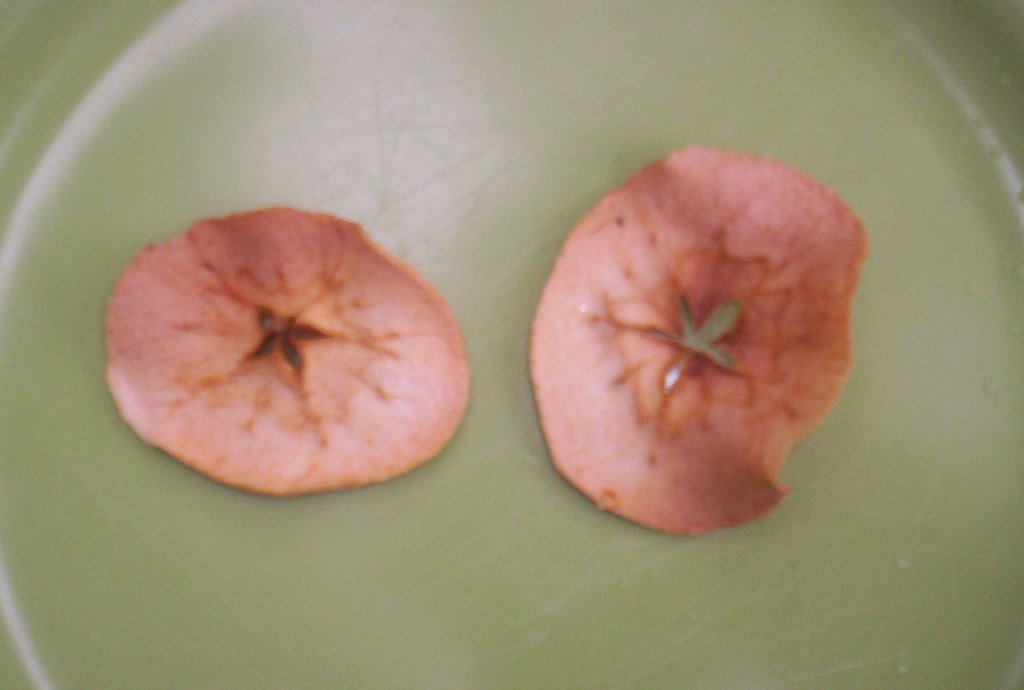
Apple rings:
1. Preheat oven to 225°. Line two baking sheets with nonstick baking mats or parchment paper.

2. Peel an apple and slice in thin rings across the core (seeds will fall away and you get a nice star pattern in the middle). Transfer slices to baking sheets. Bake until tops look dried, about 30 minutes. Flip slices; bake until completely dried, 25 to 30 minutes more. Dry on wire racks. Refrigerate in an airtight container up to 3 days.
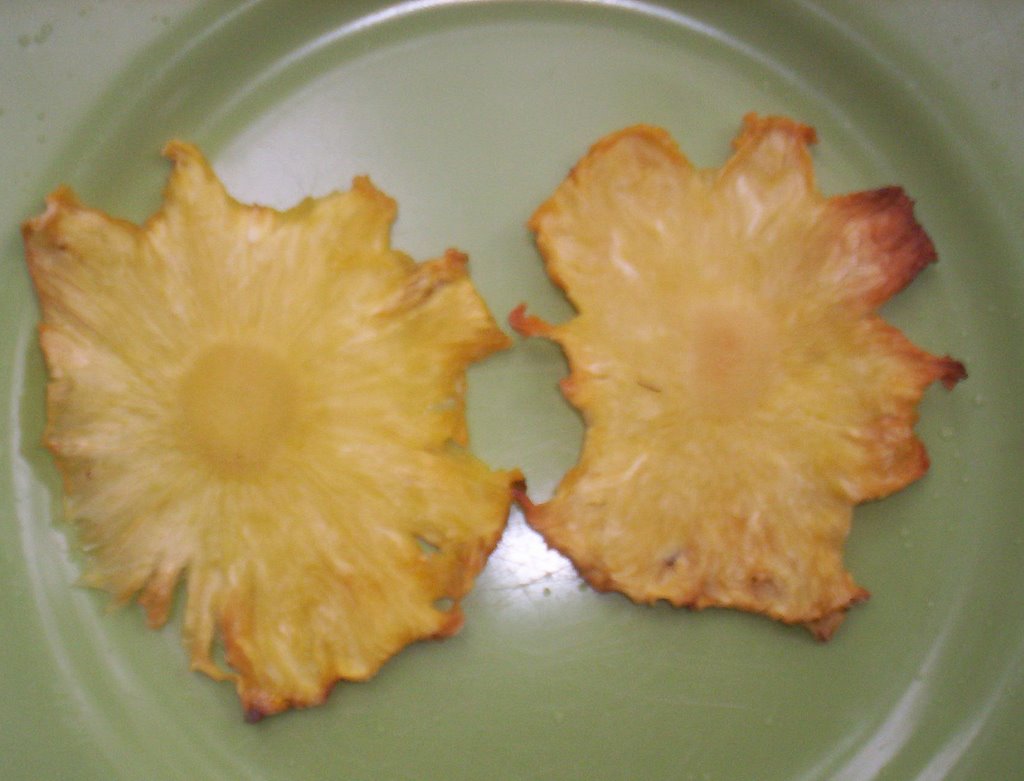
Dried pineapple flowers:
1. Preheat oven to 225°. Line two baking sheets with nonstick baking mats or parchment paper.

2. Peel pineapple. Using a small melon baller, remove and discard pineapple "eyes." Using a sharp knife, cut pineapple crosswise into very thin slices. Transfer slices to baking sheets. Bake until tops look dried, about 30 minutes. Flip slices; bake until completely dried, 25 to 30 minutes more. Dry on wire racks. Refrigerate in an airtight container up to 3 days.

Saturday, December 10, 2005

Cool School Tool - water bottle weights

Weights!

Weights are a great way to build hand and arm strength, but did you realize they also have a calming, organizing effect? Drink your water and then fill up the bottle with sand or kitty litter. Glue on the cap and you have 1 lb. weight. Use these weights to help a student transition to different areas in the school (especially helpful in keeping those waundering hands off walls and other people).